
Related posts

APES Shanghai International Auto Parts Exhibition 2026
We exhibited at APES Shanghai International Auto Parts Exhibition 2026, showcasing our latest heavy-duty lithium jump starters for commercial vehicles and heavy equipment.
The exhibition provided a...

Why Commercial Vehicle Batteries Fail More Often Than Most Fleet Managers Expect
For fleet operators, roadside assistance providers, agricultural businesses, and heavy equipment owners, a dead battery is rarely just a minor inconvenience. It often leads to unexpected downtime, del...
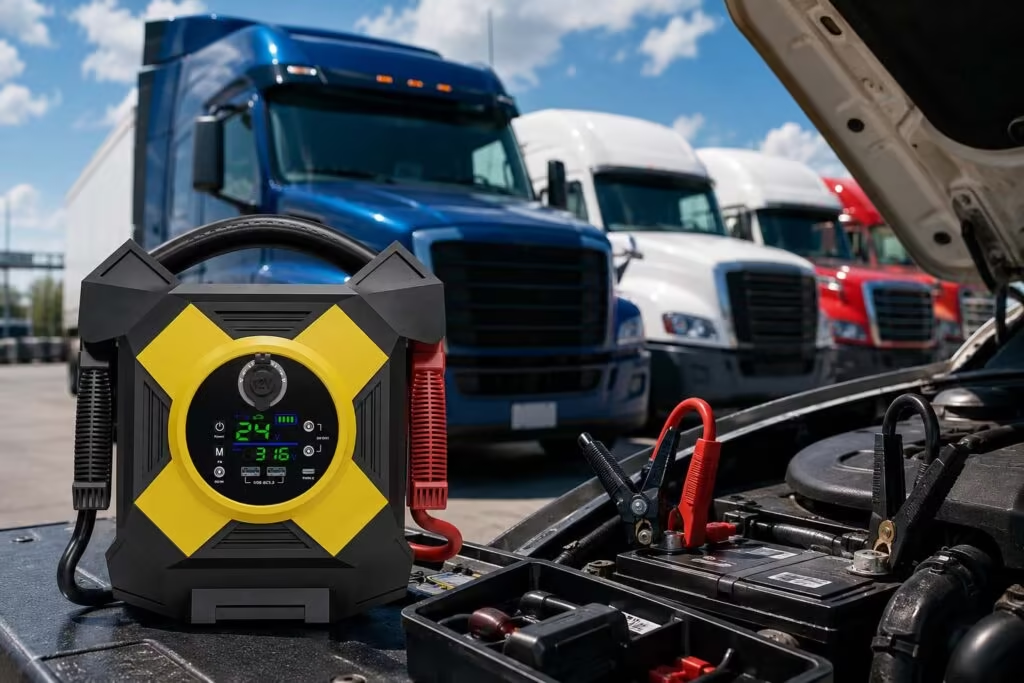
How to Choose a Heavy-Duty Jump Starter
Q1: What factors should you consider?
Engine type & size: Diesel engines need higher peak current than gasoline engines.Battery technology: Lithium provides better performance in cold and heavy...

Lead-Acid vs Lithium Jump Starters
Q1: What’s the difference between lead-acid and lithium jump starters?
Lead-acid: Heavy, lower energy density, performance drops sharply in cold temperatures, slower recharge.Lithium: Lightweight, ...

Why Mining Trucks Fail to Start in Winter
Q1: What are the common reasons mining trucks fail to start in winter?
Thickened diesel fuel and wax formation
Reduced battery output at low temperatures
Engine oil viscosity increase, makin...

How to Jump Start a Diesel Engine in Cold Weather
Q1: Why is it harder to start a diesel engine in cold weather?
Cold temperatures thicken diesel fuel and reduce battery efficiency. This increases the engine’s resistance to starting, often leaving...
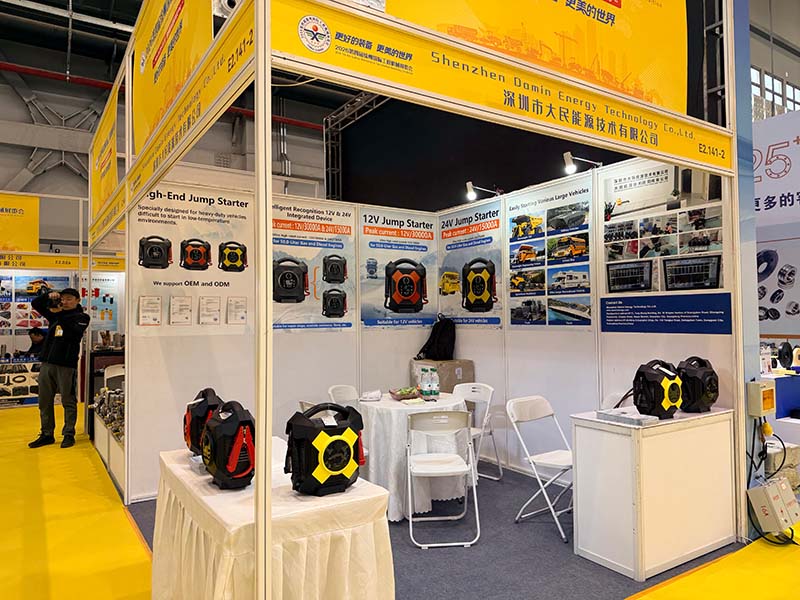
The 4th Xuzhou International Construction Machinery Exhibition 2026
We participated in The 4th Xuzhou International Construction Machinery Exhibition 2026, focusing on starting solutions for construction and heavy equipment applications.Our products demonstrated stron...

Automechanika Shanghai 2024
We returned to Automechanika Shanghai 2024, presenting upgraded heavy-duty jump starter models designed for trucks, buses, and construction equipment.The exhibition attracted significant interest from...

HKTDC Hong Kong Electronics Fair (Autumn Edition) 2024
At the HKTDC Hong Kong Electronics Fair (Autumn Edition) 2024, we continued to demonstrate our advanced portable power solutions.The event strengthened our relationships with international buyers and ...

HKTDC Hong Kong Electronics Fair (Spring Edition) 2024
We exhibited at the HKTDC Hong Kong Electronics Fair (Spring Edition) 2024, presenting our latest generation of high-performance lithium jump starters.The exhibition enabled us to connect with electro...

Automechanika Shanghai 2023
We participated in Automechanika Shanghai 2023, showcasing our heavy-duty jump starter solutions for commercial vehicles and industrial applications.The event provided strong engagement with global di...


